Pecutan Perlombongan Chile pada 2026: Bagaimana Pemecahan Batu Tanpa Letupan Memotong Kesesakan Permit
Deposit tembaga Chile adalah antara formasi batuan yang paling keras dalam perlombongan global. Penggerudian yang berkesan memerlukan alat yang dapat mengekalkan kadar penembusan dan jangka hayat alat dalam batuan yang kasar dan berkekuatan tinggi.
Mengapa ia sesuai dengan persekitaran perlombongan Chile:
Tenaga impak frekuensi tinggi dioptimumkan untuk penembusan batu keras
Konfigurasi bit berganda untuk memadankan ciri pembentukan tertentu
Bahan tahan lama dan rawatan haba untuk jangka hayat yang lebih lama dalam formasi galas kuprum yang kasar
Sesuai dengan sistem penyesuai paip gerudi dan shank standard
Untuk penggerudian penerokaan, penyediaan lubang letupan dan penggerudian kawalan gred merentasi deposit tembaga dan litium Chile, alat DTH ini memberikan kebolehpercayaan yang diperlukan untuk operasi pengeluaran tinggi yang berterusan.
Kelebihan Pengkompaunan: Menggunakan Kit Alat Penuh Bersama-sama
Nilai sebenar bagi pengendali perlombongan Chile muncul apabila teknologi ini digunakan sebagai sistem bersepadu:
Tukul dan mata gerudi DTH menggerudi lubang telaga untuk operasi pemecahan
Sistem Letupan Batu O2 memecahkan batu tanpa bahan letupan, menghapuskan kelewatan permit dan mengurangkan kos
Pelantar gerudi penggali mengendalikan tugas penggerudian dan penggalian sampingan
Hasilnya: operasi pemecahan batu yang serba lengkap yang tidak memerlukan permit bahan letupan, tiada penyimpanan yang selamat, tiada air untuk penyahairan lubang telaga dan menghasilkan pelepasan toksik sifar.
Bagi syarikat perlombongan yang beroperasi dalam persekitaran kawal selia Chile — di mana masa merupakan risiko yang tidak ternilai, " dalam kata-kata peguam industri — pendekatan bersepadu ini mengurangkan pembolehubah yang menyebabkan kelewatan dan kos berlebihan.
Penetapan Semula Perlombongan Chile — Dan Tingkap untuk Tindakan
Konvergensi pembaharuan permit, kenaikan harga pasaran tembaga dan penjejakan pantas 13 projek utama mewujudkan peluang yang sempit untuk pembekal dan pengendali peralatan perlombongan di Chile. Syarikat yang boleh menawarkan penyelesaian pemecahan batu dan penggerudian yang memudahkan pematuhan peraturan, mengurangkan penggunaan air dan tenaga serta beroperasi dengan andal dalam keadaan terpencil akan berada pada kedudukan yang baik untuk menguasai bahagian pasaran semasa gelombang pembangunan 2026-2030.
Sektor perlombongan Chile tidak rosak — ia sedang dibina semula. Dan pembinaan semula bermula dengan peralatan yang menggerakkan batu.
Water Scarcity in the Atacama Desert
Chile's Atacama Desert, one of the driest places on Earth, is the epicenter of the country's copper and lithium mining. Water availability is the most immediate crisis facing Chilean miners in 2026.
Conventional explosives face a particular challenge here. In many open-pit operations, boreholes must be kept dry for explosive loading, requiring dewatering operations that consume water — the very resource that is most scarce and most expensive. In an environment where every cubic meter of water has a measurable cost impact, any technology that reduces water consumption translates directly to the bottom line.
Energy Costs
Chile's mining operations are among the most energy-intensive in the world. Conventional explosive blasting operations require significant energy inputs for drilling, loading, ventilation, and post-blast cleanup. The more efficiently rock can be fragmented in a single operation, the lower the energy cost per tonne of material moved.
Environmental Compliance Costs
Chile's environmental review process — even under reformed timelines — imposes rigorous conditions on mining operations. Dust, vibration, noise, and emissions are all subject to monitoring and regulatory limits. Conventional explosives that produce nitrogen oxides, carbon monoxide, and fine particulate matter require additional mitigation measures and monitoring programs.
Remote Logistics
Many of Chile's new mining projects are in remote regions of the Atacama and the northern highlands. Transporting, storing, and managing conventional explosives in these areas requires specialized logistics, secure storage facilities, and armed transport — all of which add cost and complexity to operations that are already logistically challenging.
The Non-Explosive Toolkit for Chilean Mining
A new generation of non-explosive rock-breaking and drilling technologies is helping Chilean mining companies address these challenges simultaneously. Three product categories from Yantai Gaea Rock Split Machinery Technology are particularly relevant to Chile's 2026 mining landscape.
O2 Gas Energy Rock Splitting System — High-Volume Fragmentation Without Explosives
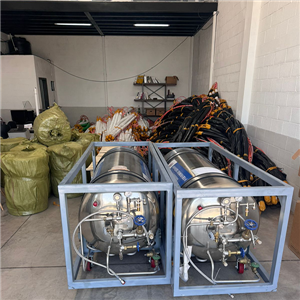
The O2 Gas Energy Rock Splitting System (Liquid Oxygen Rock Blasting System) is the flagship solution for large-scale rock fragmentation in mining, quarrying, and civil excavation.
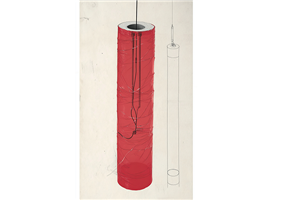
How it works: Specialized paper splitting tubes are placed in pre-drilled boreholes, and liquid oxygen is injected from a refillable gas filling tank. When remotely triggered, the liquid oxygen vaporizes and expands approximately 860 times its volume, generating controlled pressure that fractures rock along designed planes. The reaction byproducts are only water vapor and carbon dioxide.
Why it fits Chile's mining environment:
Works in water-filled boreholes — unlike conventional explosives, the O2 system requires no dewatering of boreholes before loading. In the water-scarce Atacama, this eliminates a significant water consumption point in the blasting cycle.
No explosive permits or secure storage — liquid oxygen and paper splitting tubes are classified as ordinary cargo. No military-grade storage facilities, no armed transport, no multi-agency permitting. For remote mining operations, this dramatically simplifies logistics.
Approximately USD 1 per cubic meter — 20-65% cheaper than conventional explosives on a direct cost basis, with additional savings from eliminated permitting, storage, and transport overhead.
Zero toxic emissions — no NOx, no carbon monoxide, no harmful particulate matter. This reduces environmental monitoring requirements and simplifies compliance with Chile's increasingly stringent environmental regulations.
70% less shockwave than conventional explosives, reducing vibration impact on adjacent mine infrastructure, pit walls, and nearby communities.
40HQ container holds material for 131,250 cubic meters of rock fragmentation, enough for sustained large-scale mining operations.
For open-pit copper mines like Marimaca and the 13 fast-tracked projects in Chile's pipeline, the O2 system offers a high-throughput, low-cost, and regulation-friendly alternative to conventional explosives.
Excavator Drill Rigs — Integrated Drilling and Excavation
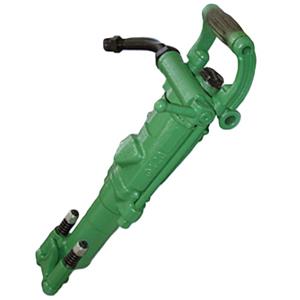
The WG-45 Excavator Drill Rig combines a rock drill and excavator in a single machine, providing powerful rock drilling with the versatility of an excavator platform.
How it works: The WG-45 uses high-frequency piston impact for efficient penetration into hard rock, with durable components and an ergonomic cab design that reduces operator fatigue during extended shift cycles.
Why it fits Chile's mining environment:
Dual-function versatility — drills boreholes and performs excavation with a single machine, reducing the equipment fleet required on remote sites
Efficient penetration in hard rock formations typical of Chile's copper deposits
Reduced transport and maintenance costs compared to operating separate drilling and excavation equipment
Suitable for mining, tunneling, and construction — applicable across the full lifecycle of mine development
For the exploration and development phases of Chile's new mining projects, the WG-45 provides an efficient drilling solution that reduces equipment complexity in remote, logistically challenging locations.
DTH Hammers and Bits — Deep Penetration in Hard Rock
Chile's copper deposits are among the hardest rock formations in global mining. Effective drilling requires tools that can maintain penetration rates and tool life in abrasive, high-strength rock.
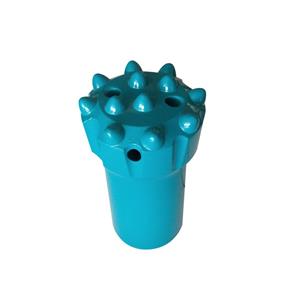
Yantai Gaea's range of DTH (Down-The-Hole) hammers and DTH bits — including CIR 90-100, CIR 90-110, and CIR 110-120 configurations — is engineered for sustained performance in demanding conditions.
Why they fit Chile's mining environment:
High-frequency impact energy optimized for hard rock penetration
Multiple bit configurations to match specific formation characteristics
Durable materials and heat treatment for extended service life in abrasive copper-bearing formations
Compatible with standard drill pipe and shank adapter systems
For exploration drilling, blasthole preparation, and grade control drilling across Chile's copper and lithium deposits, these DTH tools provide the reliability needed for sustained high-production operations.
The Compounding Advantage: Using the Full Toolkit Together
The real value for Chilean mining operators emerges when these technologies are deployed as an integrated system:
DTH hammers and bits drill the boreholes for fragmentation operations
O2 Rock Blasting System fragments the rock without explosives, eliminating permitting delays and reducing costs
Excavator drill rigs handle ancillary drilling and excavation tasks
The result: a self-contained rock-breaking operation that requires no explosive permits, no secure storage, no water for borehole dewatering, and produces zero toxic emissions
For mining companies operating in Chile's regulatory environment — where time is an "unpriceable risk," in the words of industry lawyers — this integrated approach reduces the variables that cause delays and cost overruns.
Chile's Mining Reset — And the Window for Action
The convergence of permitting reform, copper market bullishness, and the fast-tracking of 13 major projects creates a narrow window of opportunity for mining equipment suppliers and operators in Chile. Companies that can offer rock-breaking and drilling solutions which simplify regulatory compliance, reduce water and energy consumption, and operate reliably in remote conditions will be well positioned to capture market share during the 2026-2030 development wave.
Chile's mining sector is not broken — it is being rebuilt. And the rebuild starts with the tools that move rock.